Marina Skegro

CSCI 496: Senior Portfolio
In partial fulfillment of the requirements for the degree of Bachelor of Science in Computer-Science (class of 2026)
View My Resume
Dijkstra’s Algorithm GPS Shortest Path Finder
- Class: Algorithms (CSCI 415)
- Grade: B+
- Language(s): C++
- Source Code Repository: mskegro/csci-415
(Please email me to request access.)
Project Description
This project implements Dijkstra’s Algorithm to find the shortest path between vertices in a weighted directed graph, simulating a GPS navigation system. The program reads a graph from an input file containing edges and their distances, builds an adjacency matrix, and computes the shortest path from a user-specified starting vertex. The program displays an adjacency matrix, a step-by-step iteration table showing how vertex distances are updated at each iteration, and the final shortest distances from the starting vertex to all other vertices in the graph.
How to Run the Program
To run this project, follow the steps below.
1. Clone the repository
git clone https://github.com/mskegro/csci-415
2. Navigate to the project folder
cd csci-415
3. Compile the program
g++ -std=c++17 -o gps dijkstra_gps.cpp
4. Run the program
./gps
5. View output
When prompted, enter the following:
- Input file name:
input.txt - Starting vertex:
d,e, orf(or any valid vertex in the graph)
The program will then display:
- The full adjacency matrix of the graph
- A step-by-step iteration table showing how vertex distances are updated at each iteration
- Final shortest distances from the starting vertex to all other vertices
UI Design
This program runs in the terminal and does not include a graphical user interface. The output displays the adjacency matrix, the step-by-step iteration table, and the final shortest distances in a formatted console view. Three different starting vertices were tested to demonstrate the program’s correctness across multiple graph traversals.
Starting from vertex d, the program computes the shortest path to all reachable vertices in the graph (see Fig. 1).
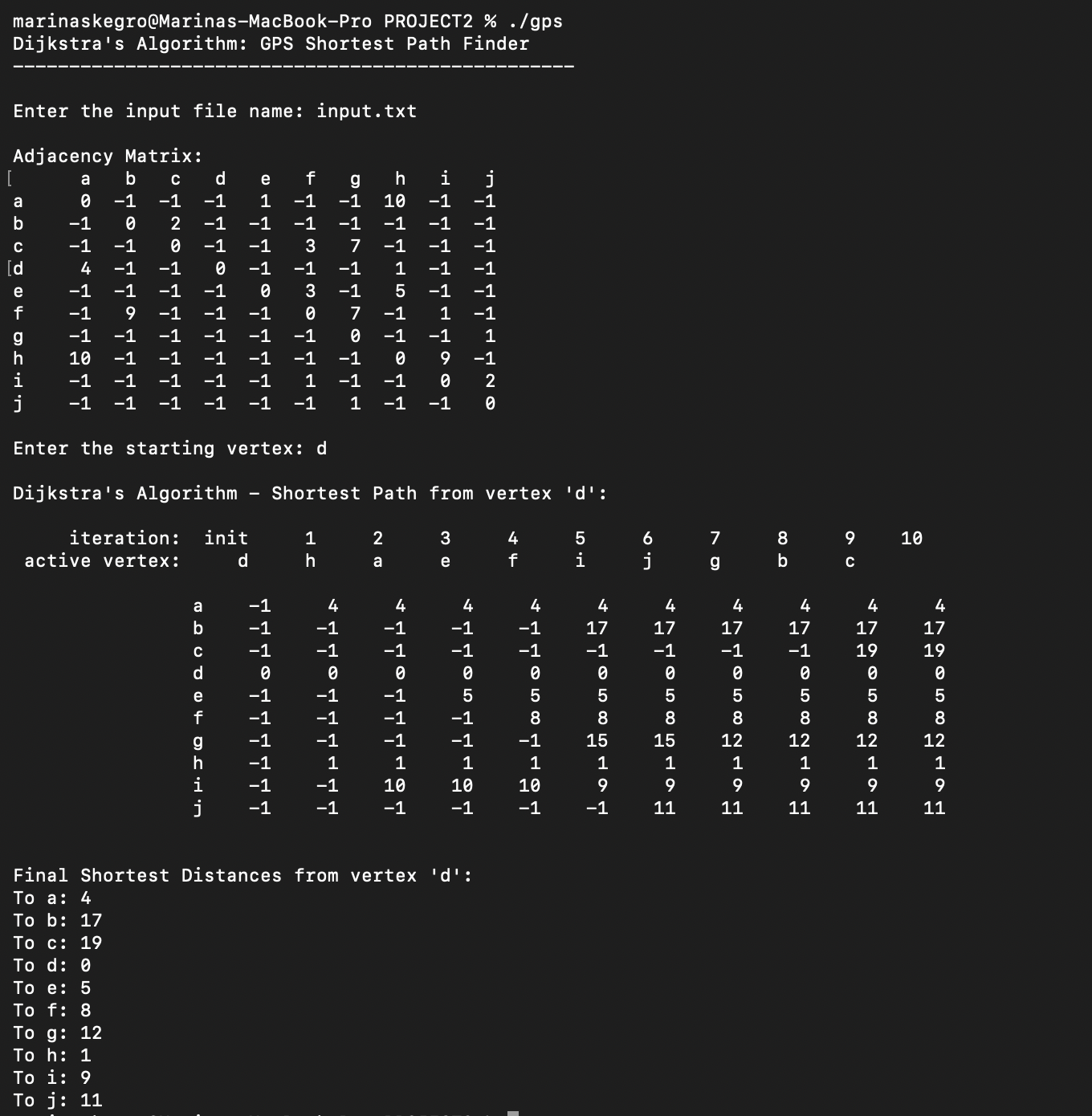
Fig 1. Terminal output showing shortest path results starting from vertex ‘d’
Starting from vertex e, the program recomputes all shortest paths from a different point in the graph (see Fig. 2).
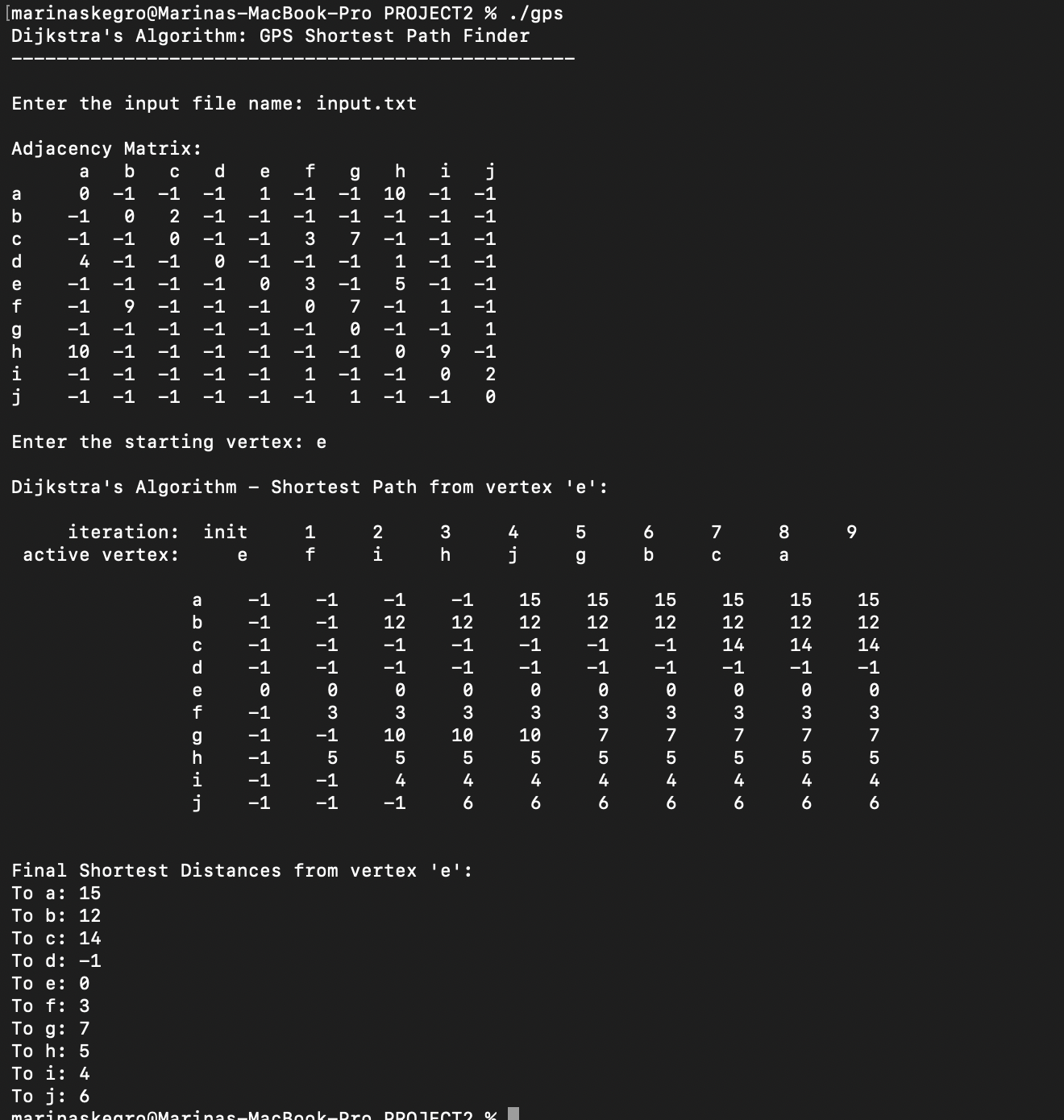
Fig 2. Terminal output showing shortest path results starting from vertex ‘e’
Starting from vertex f, the program demonstrates shortest path computation from a vertex deeper in the graph (see Fig. 3).
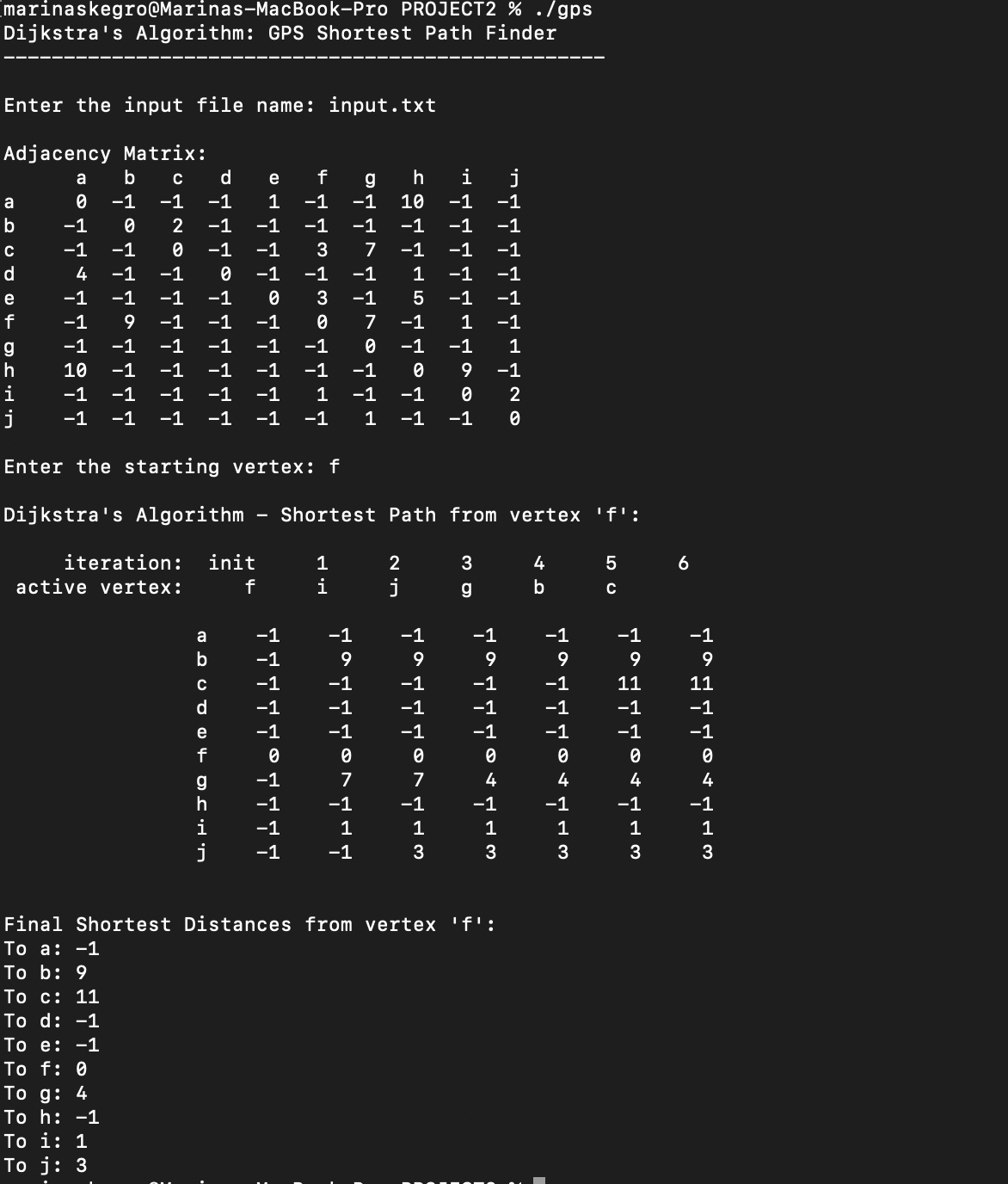
Fig 3. Terminal output showing shortest path results starting from vertex ‘f’
3. Additional Considerations
This project highlights important algorithms and data structures concepts such as:
- Dijkstra’s shortest path algorithm on weighted directed graphs
- Adjacency matrix representation of a graph
- Greedy algorithm design and iterative distance relaxation
- File I/O for reading graph data from external input files
- Step-by-step visualization of algorithm progression
For more details see mskegro.